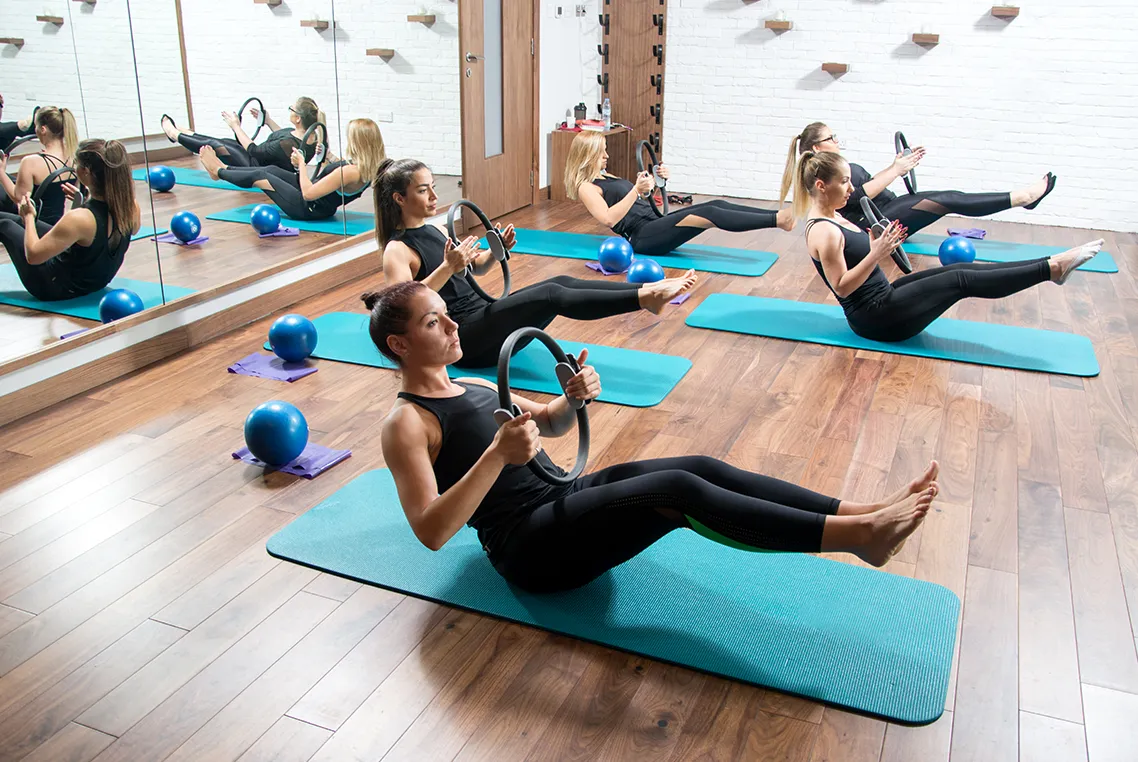
Not All Courses in Pilates Are Equal: How to Spot Quality Training
If you’ve discovered a love for Pilates, you’re not alone.…

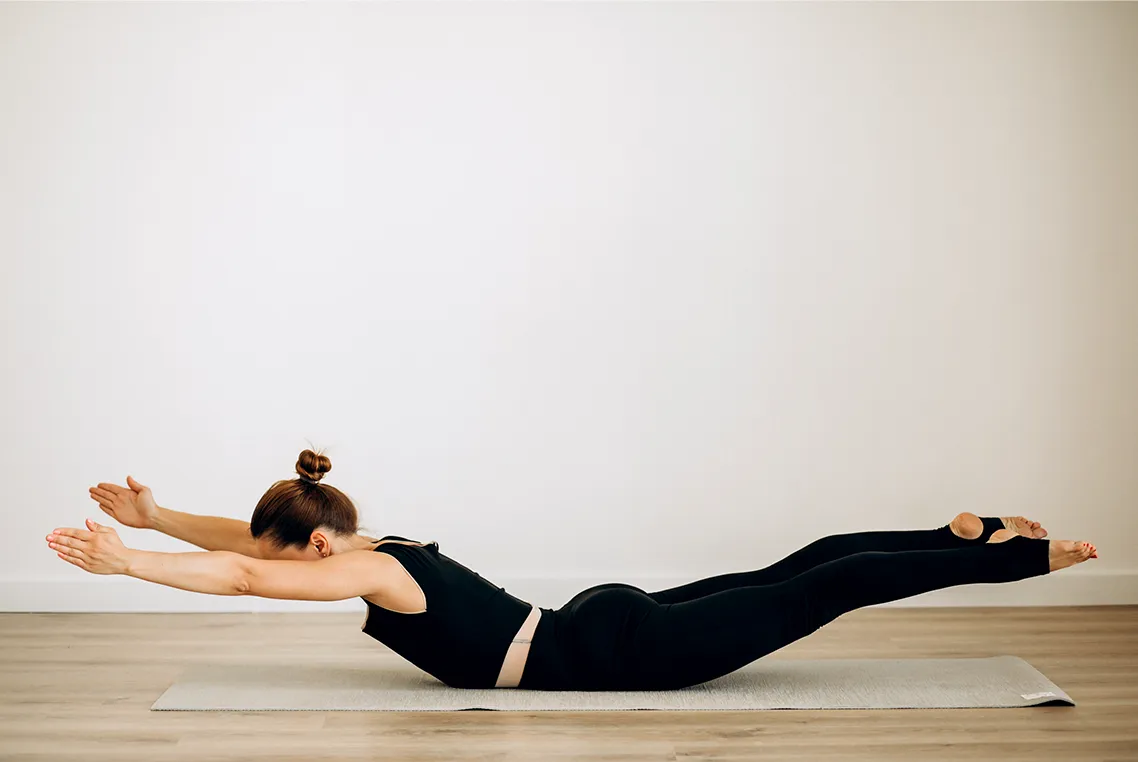
Interest in Pilates often begins quietly. You might notice how it improves your posture, helps you move with greater control, or supports you through periods of stress. Over time, a question starts to form. Could I actually teach this? Almost as quickly, that thought is followed by hesitation. Concerns about experience, confidence, time, or suitability can make the idea feel unrealistic before it has even had space to settle.
These doubts rarely come from a lack of interest or ability. More often, they are shaped by misconceptions about what a beginner Pilates instructor course involves and who it is really designed for. When these myths go unchallenged, they can quietly delay or completely prevent a step that might otherwise feel meaningful and achievable. Understanding what is true and what is assumed can help you move from uncertainty to informed action.
People rarely decide against training because Pilates does not matter to them. They hesitate because of assumptions about what will be expected before they even begin. The following myths are among the most common reasons people pause when considering a Pilates teaching course. Each one sounds reasonable on the surface, yet each one misrepresents how beginner-level training actually works.
One of the most common assumptions is that teaching Pilates is something you grow into only after years of personal practice. When instructors appear confident and technically skilled, it can feel as though experience must come first and training second. That perception alone is enough to stop many people from ever exploring a Pilates teacher training course.
In reality, beginner-level training is designed for people who are still developing their understanding. You are taught the foundations of Pilates step by step, including movement principles, safe practice, and how to guide others effectively. The expectation is not that you arrive with expertise but that you are open to learning. Experience grows through structured education not before it.
This myth is often shaped by how Pilates is presented visually. Images tend to highlight flexibility, control, and polished movement, which can quietly suggest that only certain bodies belong in teaching roles. If you do not see yourself reflected in those representations, it is easy to assume you are not suited to instruction.
Pilates, however, is intended for a wide range of bodies and abilities. Effective teaching relies far more on awareness, communication, and adaptability than on appearance. Many clients feel more comfortable with instructors who understand challenge and limitation, because it makes the practice feel accessible. A Pilates instructor course for beginners focuses on developing these teaching skills rather than meeting a physical ideal.
With so much education now delivered online, it is understandable that people assume Pilates instruction can be learned in the same way. Online learning can be helpful for building background knowledge, understanding principles, and becoming familiar with terminology. At a beginner level, that accessibility can make online study feel like a sensible and efficient option.
The limitation appears once learning moves beyond theory and into teaching. Pilates is a physical discipline that relies on observing movement, responding to what you see, and adjusting how exercises are guided in real time. These skills develop through practice, feedback, and interaction rather than observation alone. A beginner course that combines independent study with supported, in-person learning allows understanding to translate into safe, effective teaching, which is difficult to achieve through online learning alone.
Concerns about time and cost are common, particularly when the outcome of training feels uncertain. From the outside, a Pilates instructor certification can appear like a large investment, both financially and in terms of commitment. When it is unclear what the learning involves or how it is structured, that investment can feel risky rather than considered.
What this myth often overlooks is how beginner-level training is designed. Courses are structured in clear stages, with defined learning goals rather than an open-ended timeline. This makes both time and cost easier to understand and evaluate. Instead of feeling like an ongoing expense with no clear direction, training becomes a measured process where progress builds steadily. When expectations are clearer, the commitment often feels more manageable and more proportionate than it first appears.
Many people believe confidence should come first, and that training should follow once doubt has disappeared. This assumption can keep people waiting for a moment that never quite arrives.
In practice, confidence develops through learning, not before it. An entry-level Pilates course is designed to support uncertainty, not expose it. Guided practice, feedback, and repetition allow skills to develop gradually. Feeling unsure at the beginning is not a sign that you are unready. It is a normal part of learning something new.
At the heart of these myths is a misunderstanding about what professional training is actually meant to do. Many people assume that enrolling in a course is a way of proving readiness, as though education rewards those who already feel capable. When learning is viewed this way, hesitation feels sensible rather than limiting.
Beginner-level training works differently. It is designed to build readiness through structure, not demand it upfront. Learning is paced deliberately, with ideas introduced in layers so understanding can develop steadily. This approach removes pressure and replaces it with a process that focuses on clarity, safety, and skill development rather than speed or comparison.
Another common misunderstanding comes from blending personal practice with professional instruction. Teaching Pilates is not simply about doing the exercises well yourself. It involves observing others, communicating clearly, adapting movements, and making decisions in real time. These are professional skills that need guidance and practice. Beginner-level education exists because teaching has to be learned deliberately, not assumed.
These myths persist because the learning process itself is often not visible from the outside. When the pathway from beginner to competent instructor is unclear, it is easy to fill the gap with assumptions about readiness or suitability. Without understanding how training is structured to develop skill over time, hesitation can feel like a reasonable response rather than a misunderstanding of how learning works.
Many of the myths that stop people from enrolling in a qualification course show up most strongly at the point of decision. They often make the choice feel heavier than it needs to be.
That’s why deciding when to begin is often harder than deciding whether you are interested. Many people wait for certainty, assuming confidence or clarity should appear before they take action. In reality, those feelings usually develop after learning has already started. Waiting for full assurance often leads to more hesitation, not more clarity.
A more useful signal is engagement. If you find yourself paying closer attention to movement, those responses matter. Wondering why exercises are taught a certain way or wanting to understand Pilates beyond participation is often a sign of growing engagement. A beginner course offers a structured way to explore that interest without pressure to perform or commit to a fixed outcome.
Readiness is also shaped by life context. Some people begin training alongside work or family responsibilities, while others are revisiting an interest they have carried quietly for years. Beginner-level training does not require everything to be decided in advance. It gives you a contained starting point that fits around your life as it is now rather than asking you to wait for ideal circumstances.
Additionally, starting does not mean locking yourself into a permanent decision. Enrolling in a Pilates qualification course is a way of replacing assumptions with real experience. For many people, that clarity is what finally allows uncertainty to settle.
Once the pressure to feel certain is removed, confidence tends to follow. In most cases, confidence does not come first. It develops through the process of learning itself. Recognising that shift can turn a long-held sense of “not yet” into a clear and manageable next step.
In conclusion, the biggest barriers to starting are rarely physical or intellectual. More often, they are stories shaped by misconceptions about who is allowed to begin and when. These assumptions can quietly influence decisions, even when interest and curiosity are already present.
Hesitation often feels neutral, but it rarely stays that way. Over time, it can keep questions unresolved and curiosity at a distance. By examining the myths that shape those moments of doubt, it becomes easier to see them for what they are — not indicators of suitability, but misunderstandings about how learning actually works. With that clarity, the decision to begin, wait, or step away altogether can be made with far more confidence and intention.
Are these myths the only things standing between you and a beginner Pilates instructor course? Taking the first step could give you clarity, confidence, and a structured way forward sooner than you expect. Call 01 882 7777 or click here to explore your options and decide your next step with confidence.

ONSITE LESSONS
Practical classes take place either at NTC or SPORTSCO, Ringsend, Dublin 4
Saturday from 10:30am to 1pm and 2pm to 4:30pm
July 2025 – 26th♦
August 2025 – 9th, 16th, 23rd, 30th
September 2025 – 6th, 13th, 20th, 27th
October 2025 – 4th, 11th, 18th♦, 25th
November 2025 – 1st, 8th♦, 15th, 22nd, 29th, 30th
December 2025 – 6th & 7th
Examinations and/or class will start at 9:30am on dates indicated with ♦
ONLINE LESSONS
Tuesday and Thursday Evenings from 7pm to 9pm
(Recordings available afterwards)
July 2025 – 29th, 31st
August 2025 – 5th, 7th, 12th, 14th, 19th, 21st, 26th, 28th
September 2025 – 2nd, 4th, 9th, 11th, 16th, 18th, 23rd, 25th, 30th
October 2025 – 2nd, 7th, 9th, 14th, 16th, 21st, 23rd
OPTIONAL FREE COURSE
National Qualification in Kettlebell Training
November 2nd, 2025 – Sunday from 10:00-17:00