Beginner Pilates Instructor Course: 5 Myths That Could Be Holding You Back
Interest in Pilates often begins quietly. You might notice how…


For many people, finishing Pilates certification in Ireland answers one important question but immediately raises another. Am I actually ready to teach?
That uncertainty is completely normal. Your training has given you the knowledge and practical skills needed to begin teaching, but confidence develops through experience. The real transition begins after you qualify. It is through teaching real classes that your training starts to feel less like something you studied and more like something you naturally do.
Yes, a recognised Pilates certification prepares you to begin teaching within the scope of your qualification. Feeling nervous about your first class is completely normal, but it does not mean you are unprepared. Your qualification confirms that you have developed the knowledge and practical skills needed to teach safely. The confidence to teach simply takes a little longer to develop.
Many newly qualified instructors assume that experienced teachers have always felt confident in front of a class. In reality, most began exactly where you are now. The transition from student to instructor can feel significant because, for the first time, the responsibility is entirely yours. There is no tutor beside you to offer reassurance, yet that does not mean your ability has suddenly changed.
One of the biggest misconceptions about qualifying is that confidence and competence arrive together. They rarely do. By the time you complete your Pilates certification, you have already demonstrated that you can plan and deliver safe sessions, communicate effectively, and apply the principles you have learned. Confidence usually catches up after you have taught real classes and seen your participants respond positively.
This is why practical teaching experience forms such an important part of quality Pilates training. It allows you to apply your knowledge before qualifying, making the transition into independent teaching far less daunting. Rather than relying solely on theory, you begin developing the judgement and communication skills that every instructor needs when working with real people.
Describing the transition into teaching, one National Training Centre graduate recalled:
“Teaching Pilates is an ongoing learning process, but after half a year, I felt fully prepared to launch my own Pilates classes. This level of confidence is something I hadn’t experienced after completing any course before.”
Many instructors describe a similar journey. Receiving your certificate marks the beginning of your professional career rather than the point at which you stop learning. Each class you teach reinforces what you already know while helping you become a more confident and capable instructor.
Your first classes are likely to feel different from anything you experienced during training, and that is entirely normal. Teaching real clients introduces situations that cannot be fully recreated in a learning environment. Every class brings different personalities, abilities and expectations, helping you develop practical judgement alongside your teaching skills.
The biggest adjustment for many newly qualified instructors is recognising that every class has its own character. During your training, you become familiar with practising alongside fellow students who understand the learning process. Once you begin teaching independently, you are responsible for guiding people with different levels of confidence, movement ability and personal goals. Learning to respond to those differences is one of the most rewarding parts of becoming an instructor.
Another difference is that participants are not expecting perfection. They want an instructor who explains exercises clearly, creates a welcoming atmosphere and helps them move safely. The knowledge and practical skills you developed during your Pilates certification are designed to help you do exactly that.
Teaching real classes also allows you to discover your own style as an instructor. You may naturally develop a calm, encouraging approach or find that your classes become more energetic and motivational. The goal is not to teach exactly like your tutors. It is to build on the principles you learned during training while developing a style that feels natural to you.
As the weeks pass, your attention gradually shifts. Instead of concentrating on remembering every cue, you become more aware of how your participants are moving and responding throughout the class. That change often marks a turning point. Teaching starts to feel less like recalling what you learned during training and more like responding confidently to the people in front of you.
Your first teaching opportunities often come from taking the initiative. Applying for advertised roles and contacting local fitness facilities are practical ways to get started. Letting people know you are qualified can also lead to opportunities that are not formally advertised.
Finding your first class is often less about waiting for the perfect opportunity and more about making yourself visible. Across Ireland, gyms, health clubs and Pilates studios regularly need instructors to cover classes or support growing timetables. Introducing yourself, sharing your qualification and expressing an interest in teaching can often open doors that would otherwise be easy to miss.
One concern shared by many newly qualified instructors is the belief that employers only want experienced teachers. While experience is valuable, every instructor has to start somewhere. Many employers understand this and are happy to consider newly qualified instructors who demonstrate professionalism and hold a recognised qualification.
Your first teaching role does not need to be a full timetable. Beginning with one or two classes each week is common and gives you time to gain practical experience. It also allows you to refine your teaching and become more comfortable leading different groups before taking on additional classes.
Reflecting on that initial step, one National Training Centre graduate shared:
“I started my own classes shortly after qualifying and I love teaching more than I ever thought I would.”
Not every opportunity comes through a formal recruitment process. Some instructors are invited to cover existing classes, while others build experience by organising sessions within their local community. The important thing is to begin teaching, because every class helps you build the experience that supports future opportunities.
Pilates certification gives you the flexibility to build a career in a range of professional settings. Your first teaching role does not determine where you will spend your entire career. Many instructors move between different environments as they gain experience and discover the type of teaching they enjoy most.
Gyms, health clubs and leisure centres are common starting points because Pilates often forms part of a broader fitness timetable. Boutique Pilates studios offer a different experience, with classes that are typically smaller and more focused on the Pilates method. Each setting provides valuable experience and helps instructors develop their own teaching style.
Career opportunities also extend beyond traditional fitness facilities. Community organisations, adult education programmes and workplace wellbeing initiatives increasingly include Pilates within their health and wellbeing programmes. Working in different environments exposes instructors to people with varying goals, abilities and levels of experience. This makes every teaching setting an opportunity to continue learning.
As your experience grows, your working pattern may evolve naturally. Teaching exclusively for one organisation suits some instructors at the beginning of their careers. But many gradually expand their timetable by adding private classes or working across multiple venues. Over time, it is common to combine employed and self-employed work in a way that reflects your professional goals and preferred lifestyle.
Rather than following a fixed career path, Pilates certification gives you the freedom to shape your career as your interests develop. The experience you gain, the people you teach and the opportunities you choose all influence where your career goes next.
You do not need additional training to begin teaching safely after qualifying. However, continuing your professional development becomes an important part of building your career over time.
For many instructors, the decision to continue learning is driven by experience rather than necessity. Once you begin teaching regularly, you encounter different clients, movement challenges and teaching situations that naturally encourage you to deepen your knowledge. Professional development becomes less about gaining another qualification and more about responding to the questions that arise through everyday practice.
One of the interesting things about working with real clients is that it often changes the questions you ask. During training, your focus is on learning the principles of Pilates and developing your teaching skills. Once you begin working independently, you start thinking more deeply about individual movement patterns, adapting exercises, and helping different types of clients achieve their goals.
Those experiences often shape the direction of your future learning. You may decide to deepen your knowledge in areas such as rehabilitation, movement science, athletic performance or working with older adults. Ultimately, taking CPD courses allows you to build on your existing knowledge while broadening the range of clients you feel confident supporting.
Further education should not be viewed as filling gaps in your Pilates certification. Instead, it reflects the reality that learning continues throughout a professional career. The knowledge you gain through additional study complements the practical experience you build over time, helping you refine your teaching and continue growing as an instructor.
Pilates certification can lead to a long-term career by providing the knowledge and practical skills needed to begin teaching with confidence. As you gain experience, new opportunities often arise naturally. Over time, the reputation you build and the relationships you develop can support a rewarding and sustainable career.
Long-term careers in Pilates rarely happen overnight. Most instructors begin with a small number of classes and gradually become more confident as they gain practical experience. Every class teaches something new. Each session helps you refine your teaching and become more confident working with different clients. These experiences gradually shape the instructor you become.
As your experience grows, opportunities often appear in unexpected ways. A recommendation from a satisfied participant may lead to another class. Covering a session for another instructor can become a regular teaching opportunity. Careers often grow through consistent teaching and the positive experiences clients have in your classes rather than through one defining moment.
Building a long-term career also depends on the trust you establish with the people you teach. Clients who enjoy your classes are more likely to return and recommend you to others. As those relationships grow, so does your professional reputation. New opportunities often follow because people value instructors they know and trust.
Looking back on how their career had developed, another National Training Centre graduate noted:
“The more experience I get teaching Pilates, the more I realise how great a course you taught us.”
That perspective reflects something many instructors only appreciate after they begin teaching. The value of Pilates certification extends well beyond achieving a qualification. The knowledge and practical skills you develop during training continue to support your teaching long after you have qualified, giving you a foundation that grows stronger with every class you teach.
In conclusion, Pilates certification is not simply about earning a qualification. It is about preparing for the transition from learning to teaching. While your certificate marks the end of your training, it also marks the beginning of a career that develops through experience, reflection and continued professional growth.
Every instructor starts somewhere. Your first class may feel unfamiliar. Your confidence may take time to develop. Along the way, your career will probably evolve in ways you do not expect. That is a normal part of becoming an effective teacher. With a recognised Pilates certification and a willingness to keep learning, you have the foundation to build a rewarding career helping others improve their health, movement and wellbeing.
Ready to begin your Pilates certification in Ireland? Call us today on 01 882 7777 to secure your place on our Pilates instructor qualification course. The sooner you begin, the sooner you can start building the experience that shapes your future career.
ONSITE LESSONS
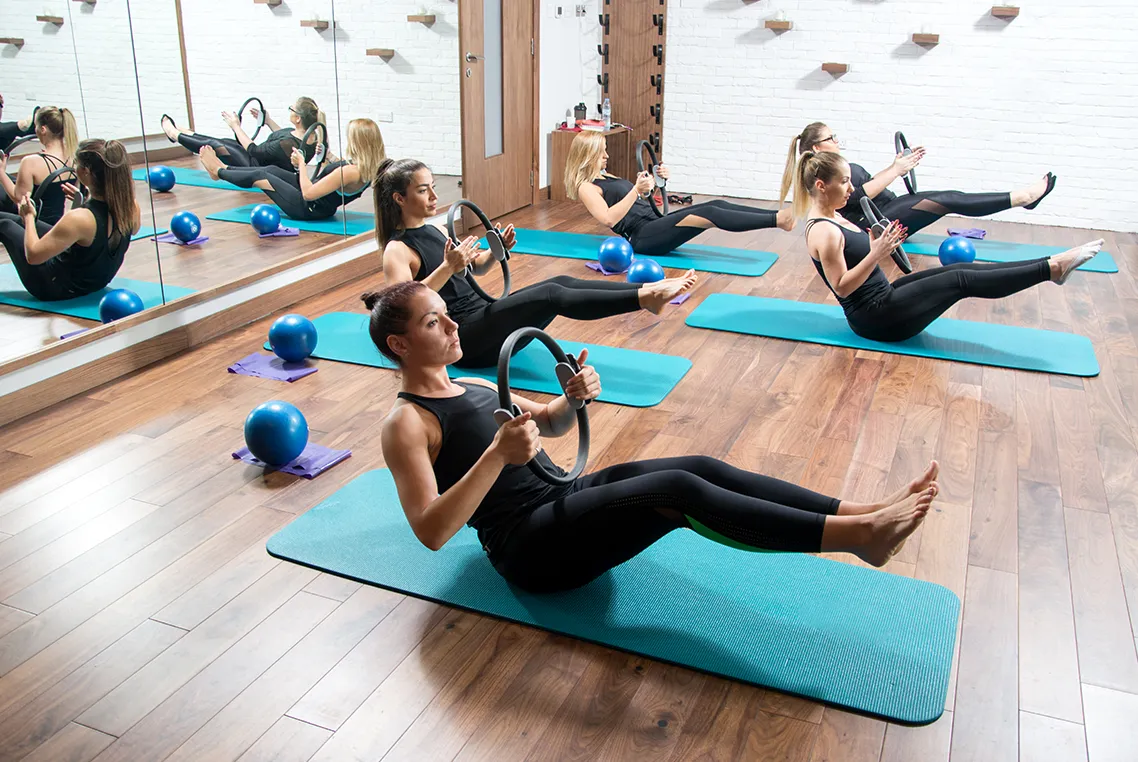
Practical classes take place either at NTC or SPORTSCO, Ringsend, Dublin 4
Saturday from 10:30am to 1pm and 2pm to 4:30pm
July 2025 – 26th♦
August 2025 – 9th, 16th, 23rd, 30th
September 2025 – 6th, 13th, 20th, 27th
October 2025 – 4th, 11th, 18th♦, 25th
November 2025 – 1st, 8th♦, 15th, 22nd, 29th, 30th
December 2025 – 6th & 7th
Examinations and/or class will start at 9:30am on dates indicated with ♦
ONLINE LESSONS
Tuesday and Thursday Evenings from 7pm to 9pm
(Recordings available afterwards)
July 2025 – 29th, 31st
August 2025 – 5th, 7th, 12th, 14th, 19th, 21st, 26th, 28th
September 2025 – 2nd, 4th, 9th, 11th, 16th, 18th, 23rd, 25th, 30th
October 2025 – 2nd, 7th, 9th, 14th, 16th, 21st, 23rd
OPTIONAL FREE COURSE
National Qualification in Kettlebell Training
November 2nd, 2025 – Sunday from 10:00-17:00