I really enjoyed working with the Thiel cadavers compared to fresh frozen specimens.
Kerstin Bredehorn
Dissection Attendee
Kerstin Bredehorn
Dissection Attendee

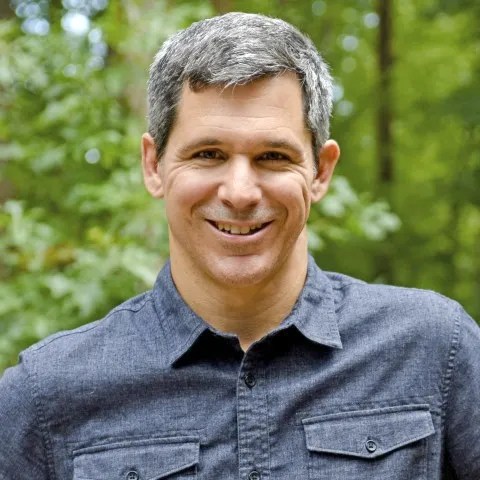
Hear from the professionals who have attended one of John's Dissection courses.


Led by Clinical Anatomist John Sharkey and fascia experts Dr Wilbour Kelsick, Mark Flannigan, and Rev Dr Joanne Avison, this three-day dissection course takes place at the Department of Anatomy, King's College London.
This year's theme "What Happens in Vagus..." explores the vagus nerve and its fascial relationships through hands-on cadaver dissection, including an exclusive pre-recorded conversation between John Sharkey and Polyvagal Theory founder Dr Stephen Porges. Suitable for clinicians, anatomists, and manual and movement specialists.
The three-day programme combines expert presentations with hands-on dissection of formalin-fixed cadavers in small, focused groups, guided by Clinical Anatomist John Sharkey and his team throughout.
Day One — Fascial foundations and tensegrity-based dissection approach. Presentation by Rev Dr Joanne Avison. Begin guided dissection tracing the vagus nerve from cranium to abdomen.
Day Two — Presentation by Dr Wilbour Kelsick. Continuing vagal dissection; examining perineural fascial continuities. Exclusive viewing of Dr Stephen Porges' recorded conversation with John Sharkey on Polyvagal Theory and fascia.
Day Three — Independent fascial-vagal dissection. Group discussion, collaborative reflection, and closing roundtable: "Fascia as the Pre-Neural Polyvagal Tissue — What Happens Next?"
There is no formal assessment. Course content, presenters and schedule may be subject to change.
| Early Access | Standard | |
|---|---|---|
| Individual | £1,890 | £2,490 |
Early Access rate available until 31 December 2025. Standard rate applies thereafter. Full payment required at time of booking.
Payment is processed online via PayPal in GBP. Contact our office on +353 1 882 7777 for further information or to speak with John Sharkey before booking.
This course welcomes participants from all professional and educational backgrounds — healthcare professionals, manual and neuromuscular therapists, movement specialists, researchers, and students with a keen interest in human anatomy.
No formal prerequisites apply. Participants should be comfortable working with formalin-fixed cadavers and have a genuine curiosity about fascia, tensegrity, and the body's continuous architecture. Please contact us at info@ntc.ie or +353 1 882 7777 if you have any concerns about suitability.
Places on this course are limited. Register early to secure yours.
3 Day Hands-On Course
Thursday to Saturday, 9am – 5pm
June 25th, 26th & 27th 2026
Dates may be subject to change
King's College School Of Medicine
Led by world-renowned fascia authorities and clinical anatomists with decades of hands-on dissection experience.
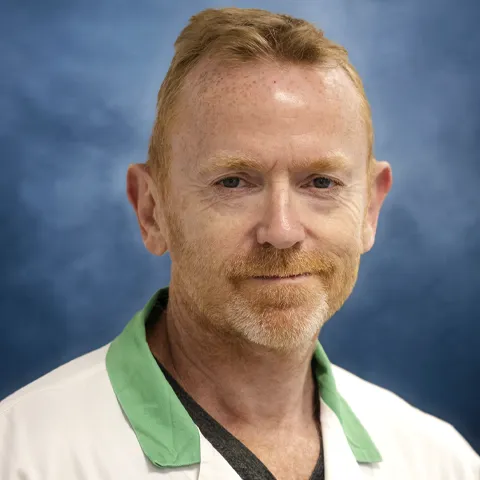
Mark Flannigan is a highly experienced and dynamic teacher and presenter in the fitness and wellness industry, with over 30 years of experience. He has shared his extensive knowledge and expertise in Australia, the United States, Japan, Brazil, and most of Europe.
As a successful competitor and judge for the Federation of International Gymnastics, Mark has gained invaluable experience and skills. He holds a BSc in Exercise Science and is a Neuromuscular Therapist NMT from the National Training Centre.
In 2016, Mark began participating in biotensegrity focused dissections with John Sharkey, a world-renowned anatomist. This experience has led Mark to shift his understanding of human anatomy into the 21st century and has allowed him to apply biotensegrity principles to his work as a Strength and Conditioning trainer and Pilates teacher.
Mark’s expertise and experience have made him a highly respected and sought-after practitioner in his field. His dedication to advancing the field of fitness and wellness and his commitment to incorporating the latest research and techniques into his work have helped many clients achieve their goals and improve their overall health and well-being.

DR. WILBOUR KELSICK specialises in enhancing elite athletic performance and rehabilitating sports injuries using applied functional anatomy.
Dr. Kelsick completed his BSc. in Kinesiology at SFU and his D.C. at the Canadian Memorial Chiropractic College. He is an esteemed Fellow and Vice President of the College of Chiropractic Sport Sciences in Canada and a Fellow of the College of Chiropractic Rehabilitative Sciences in Canada. He is also a faculty member in the Department of Graduate Studies at the Canadian Memorial Chiropractic College.
With his vast experience, Dr. Kelsick has authored and published several articles, contributed as an author for a medical text, and serves on the editorial board of the Journal of the Canadian Chiropractic Association, a prestigious peer-reviewed journal.
Dr. Kelsick holds post-graduate specialties in the field of sports injuries and musculoskeletal rehabilitation. He has served as a team doctor at several high-profile events, including the Olympics, World Championships, and Commonwealth Games. Dr. Kelsick is a sought-after lecturer, delivering talks both locally in Canada and internationally, sharing his expertise in enhancing elite athletic performance and rehabilitating sports injuries using applied functional anatomy.
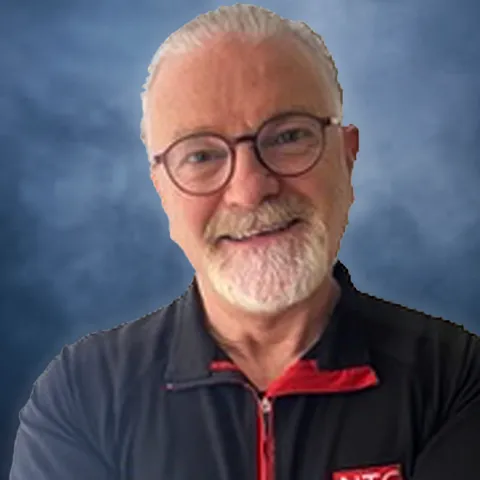
John Sharkey is a well-known international educator, author, and expert in various fields such as Clinical Anatomy, Exercise Physiology, human movement, and manual treatment of chronic pain using European Neuromuscular Therapy. He is a graduate of the University of Dundee, University of Liverpool, and University of Chester, completing both undergraduate and post-graduate studies in Exercise Physiology and Clinical Anatomy. He also holds a post-graduate certificate in education.
John is a senior lecturer in the Faculty of Medicine, Dentistry and Life Sciences at the University of Chester/NTC, Dublin. Additionally, he serves as the programme leader for the highly acclaimed series of Human Anatomy Dissection programmes , delivered past, present and future at King’s College London (England), The University of Dundee (Scotland), The Ohio State University (USA), Trecchi Human Academy (Italy) and The University of Witwatersrand School of Anatomical Sciences (South Africa). These courses are delivered teaching the geometry of anatomy and movement from the unique perspective of Biotensegrity-Anatomy for the 21st Century. His presentations are informative, entertaining, respectful, and insightful.
John is a proponent of the “Biotensegrity-Anatomy for the 21st century” model, which incorporates the groundbreaking work of his mentor, Dr. Stephen Levin MD. John is recognised as one of the foremost experts in the world on fascia and Biotensegrity. He specialises in teaching European Neuromuscular Therapy using living anatomy to address chronic pain conditions. Furthermore, he serves on the editorial board of professional journals such as the Journal of Bodywork and Movement Therapies (JBMT) and the International Journal of Osteopathic Medicine.

Joanne Avison is a certified Structural Integration practitioner (IASI) and a graduate of Tom Myer’s KMI school (1999-2001), with a wealth of experience in both movement and manual therapy. Joanne is a certified teacher of Kinesis and teaches applied structural anatomy for movement and manual practitioners in various fields internationally.
Joanne is the Director of the Art of Contemporary Yoga Teacher Training in London, UK, and a Senior Yoga Teacher (E-RYT500) and Certified Yoga Therapist (C-IAYT) with the International Association of Yoga Therapists.
As a member of the BioTensegrity Interest Group (B.I.G.), Joanne is deeply interested in the application of BioTensegrity principles to the understanding of the human blueprint and natural biomotional organisation. She is dedicated to making this emerging context for human movement more accessible and understandable through her writing and workshops.
Joanne is also a CMED Graduate (2004) and has extensively studied human development, with a particular focus on soft tissue and the connections between archetypal behavior and physiology. Her rigorous studies include Human Dissection and movement research in Fascial Fitness with Robert Schleip.
What is the refund policy for the course?
When can I book travel and accommodation?
What fixation method is used?
ONSITE LESSONS
Practical classes take place either at NTC or SPORTSCO, Ringsend, Dublin 4
Saturday from 10:30am to 1pm and 2pm to 4:30pm
July 2025 – 26th♦
August 2025 – 9th, 16th, 23rd, 30th
September 2025 – 6th, 13th, 20th, 27th
October 2025 – 4th, 11th, 18th♦, 25th
November 2025 – 1st, 8th♦, 15th, 22nd, 29th, 30th
December 2025 – 6th & 7th
Examinations and/or class will start at 9:30am on dates indicated with ♦
ONLINE LESSONS
Tuesday and Thursday Evenings from 7pm to 9pm
(Recordings available afterwards)
July 2025 – 29th, 31st
August 2025 – 5th, 7th, 12th, 14th, 19th, 21st, 26th, 28th
September 2025 – 2nd, 4th, 9th, 11th, 16th, 18th, 23rd, 25th, 30th
October 2025 – 2nd, 7th, 9th, 14th, 16th, 21st, 23rd
OPTIONAL FREE COURSE
National Qualification in Kettlebell Training
November 2nd, 2025 – Sunday from 10:00-17:00